Source Tractor Mounted Precision Planter for Farms, Forestry, and Aquaculture
Find and compare 30 tractor mounted precision planter options for maize, corn, and tuber planting. Evaluate semi-automatic and simple mechanization models with continuous ditching and dual seeding capabilities for efficient agricultural operations.
Key considerations
Products List




Comprehensive Sourcing Guide
Tractor Mounted Precision Planter Sourcing Guide
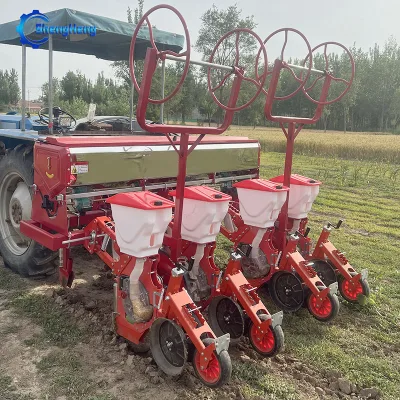
Procuring a tractor-mounted precision planter requires a careful balance between mechanical compatibility, agronomic performance, and commercial reliability. These machines are designed to attach to agricultural tractors via a three-point linkage system, allowing for efficient seed and fertilizer placement across various crop types. Buyers must navigate a market where specifications vary significantly between manual-assist models and fully integrated tractor-powered units. Understanding the distinction between simple seedling planters and complex no-tillage seeders is critical for aligning equipment with specific farming operations.
The sourcing process involves evaluating multiple listing signals, from power sources to certification standards, to ensure the selected machinery meets operational demands. While some units rely on manual labor for specific functions, others are fully integrated with tractor power take-offs or hydraulic systems. This guide provides a structured approach to verifying technical specifications, ensuring compliance, and managing commercial terms, helping buyers make informed decisions without relying on unverified claims or speculative market data.
Product Scope and Observed Listing Signals
The current market for tractor-mounted precision planters exhibits a wide range of product types, from semi-automatic dibble seeders to full-size fertilizer applicators. Listings indicate that these machines are primarily used for sowing seeds in agriculture and forestry applications, with specific models tailored for maize, corn, rice, wheat, tubers, and beans. The observed product count suggests a diverse supply base, with prices ranging from $150 to $12,800 USD, reflecting differences in mechanization levels, material quality, and functional complexity. Buyers should note that "precision" in this context often refers to the mechanical accuracy of seed placement rather than GPS-guided automation, which is not explicitly supported by the provided facts.
Key selling points frequently highlighted in listings include high productivity, ease of operation, and the availability of customization. Many suppliers offer online support, video technical assistance, and free spare parts, which are crucial for maintaining operational continuity in remote farming areas. The condition of the equipment is consistently listed as new, with core components typically covered by a one-year warranty. However, buyers must distinguish between general marketing terms and specific technical capabilities, such as the difference between continuous ditching modes and joint operating machines that combine seeding and fertilization in a single pass.
Technical Specifications to Verify
When evaluating technical specifications, the first critical step is verifying the power source and mechanization level. Some models are classified as semi-automatic or simple planting machines that may rely on manual labor for certain functions, while others are fully tractor-mounted units designed for high-speed operation. The linkage type is predominantly listed as a 3-point mounted system, which is standard for attaching to most agricultural tractors. Buyers must confirm the weight and dimensions of the unit, as heavier machines (e.g., 280 kg) may require more robust tractor hydraulics compared to lighter units (e.g., 26.5 kg).
The functional capabilities of the planter must align with the intended crop and soil conditions. Specific models are designed for dual seeding and fertilization, utilizing full-size fertilizer applicators to enhance nutrient delivery. The sowing mechanism varies, with some units operating as dibble seeders and others as no-tillage seeders suitable for direct planting into undisturbed soil. Buyers should verify the row configuration, as some standards support 1-18 rows, allowing for flexibility in field layout. Additionally, the color and packaging details, such as iron cages or carton packaging, can provide insights into the build quality and shipping requirements, which impact logistics costs and handling procedures.
Compliance and Safety Documentation
Compliance with international standards is a key factor in ensuring the safety and reliability of tractor-mounted precision planters. Certifications such as CE and ISO9001 are commonly listed, indicating that the manufacturer adheres to specific quality management and safety regulations. Buyers should request valid certification documents to verify that the equipment meets the regulatory requirements of their destination country. The presence of these certifications often correlates with better manufacturing practices and more consistent product quality, reducing the risk of mechanical failures during critical planting seasons.
Safety documentation should also include detailed operating manuals and maintenance guidelines. Suppliers are expected to provide video outgoing inspections and video technical support, which can help buyers verify the condition of the machine before shipment and troubleshoot issues during installation. The warranty of core components, typically listed as one year, should be clearly defined in the contract, specifying what parts are covered and the conditions under which claims can be made. Buyers must ensure that all safety guards and operational controls are clearly labeled and compliant with local agricultural machinery safety standards.
Cost Drivers and Commercial Terms
The cost of a tractor-mounted precision planter is influenced by several factors, including the level of mechanization, material quality, and functional complexity. Prices observed in the market range from $150 to $12,800 USD, with higher prices typically associated with fully integrated tractor-powered units that offer dual seeding and fertilization capabilities. The minimum order quantity (MOQ) is generally low, ranging from 1 to 10 sets, making these machines accessible for individual farms and small agricultural enterprises. Buyers should consider the total cost of ownership, including shipping, installation, and maintenance, rather than just the initial purchase price.
Commercial terms such as payment methods, delivery times, and after-sales service policies are critical components of the procurement process. Suppliers often provide free spare parts and online support to enhance customer satisfaction and reduce downtime. Buyers should negotiate clear terms for warranty claims and technical support, ensuring that assistance is available in their local language and time zone. The packaging method, whether in iron cages or cartons, can also impact shipping costs and the risk of damage during transit, so buyers should verify that the packaging is suitable for long-distance transportation.
Supplier Qualification and Quality Control
Supplier qualification is essential for ensuring the reliability and consistency of tractor-mounted precision planters. Buyers should verify the supplier's manufacturing capabilities, including their production facilities and quality control processes. The origin of the products, often listed as Shandong, China, or other regions in China, should be confirmed to assess the supplier's reputation and experience in the agricultural machinery industry. Suppliers with a history of providing video outgoing inspections and detailed product specifications are more likely to deliver high-quality equipment that meets buyer expectations.
Quality control measures should include rigorous testing of core components and final assembly checks. Buyers should request evidence of these tests, such as video recordings or inspection reports, to verify the machine's performance before shipment. The availability of customization options allows suppliers to tailor the equipment to specific buyer requirements, but buyers must ensure that these customizations do not compromise the machine's structural integrity or operational safety. Establishing a clear communication channel with the supplier for ongoing support and issue resolution is crucial for a successful procurement experience.
Long-Term Procurement Checks
Long-term procurement success depends on the supplier's ability to provide consistent quality and reliable after-sales service. Buyers should monitor the performance of the machinery over time, tracking metrics such as seed placement accuracy, fertilizer distribution uniformity, and mechanical durability. Regular maintenance and timely replacement of wear parts are essential for extending the lifespan of the planter and maintaining optimal performance. Suppliers that offer comprehensive training and technical support can help buyers maximize the efficiency and productivity of their planting operations.
Building a long-term relationship with a qualified supplier can lead to better pricing, priority service, and access to new product innovations. Buyers should regularly review their procurement strategies, comparing the performance of different models and suppliers to identify opportunities for improvement. Staying informed about industry trends and technological advancements in precision planting can help buyers make informed decisions about future equipment purchases. By focusing on quality, compliance, and supplier reliability, buyers can ensure that their tractor-mounted precision planters deliver consistent value and support their agricultural goals.
FAQs
What is the typical weight of a tractor mounted precision planter?
The weight varies significantly by model and capacity. For example, a manual vegetable planter may weigh 26.5 kg, while a larger tractor-mounted unit designed for maize planting can weigh up to 280 kg. Buyers should verify the specific weight to ensure their tractor's hitch capacity is sufficient.
Which certifications are commonly associated with these planting machines?
Common certifications include CE and ISO9001. These standards indicate compliance with safety and quality management systems. Buyers should request current certification documents from suppliers to verify that the specific model meets their regional regulatory requirements and quality expectations.
Can tractor mounted precision planters be customized for specific crops?
Yes, customization is available for many models. Suppliers can adjust row spacing, seed metering mechanisms, and fertilizer application systems to suit specific crops like maize, rice, or wheat. Buyers should specify their crop type and field conditions to ensure the machine configuration matches their operational needs.
What is the standard warranty for core components of these planters?
A standard warranty of one year is typically provided for core components. This coverage usually includes major mechanical parts but may exclude wear items. Buyers should review the warranty terms to understand which parts are covered and what conditions might void the warranty, such as improper maintenance.
How does the power source affect the operation of a planter?
The power source determines the machine's autonomy and integration. Some models are manual, relying on labor, while others are tractor-mounted and powered by the vehicle. Tractor-mounted units offer higher productivity and precision for large fields, whereas manual options are suitable for small plots or specific vegetable planting tasks.
What after-sales support is generally provided by suppliers?
Suppliers typically offer online support, video technical assistance, and free spare parts. Video outgoing inspection is also provided to verify product condition before shipment. This support structure helps buyers troubleshoot issues remotely and ensures they have access to critical replacement parts for maintenance.
What is the minimum order quantity for these machines?
The minimum order quantity is often one set, allowing individual farmers or small cooperatives to purchase a single unit. However, bulk orders may qualify for different pricing or shipping arrangements. Buyers should confirm the MOQ and associated logistics costs with the supplier before placing an order.